
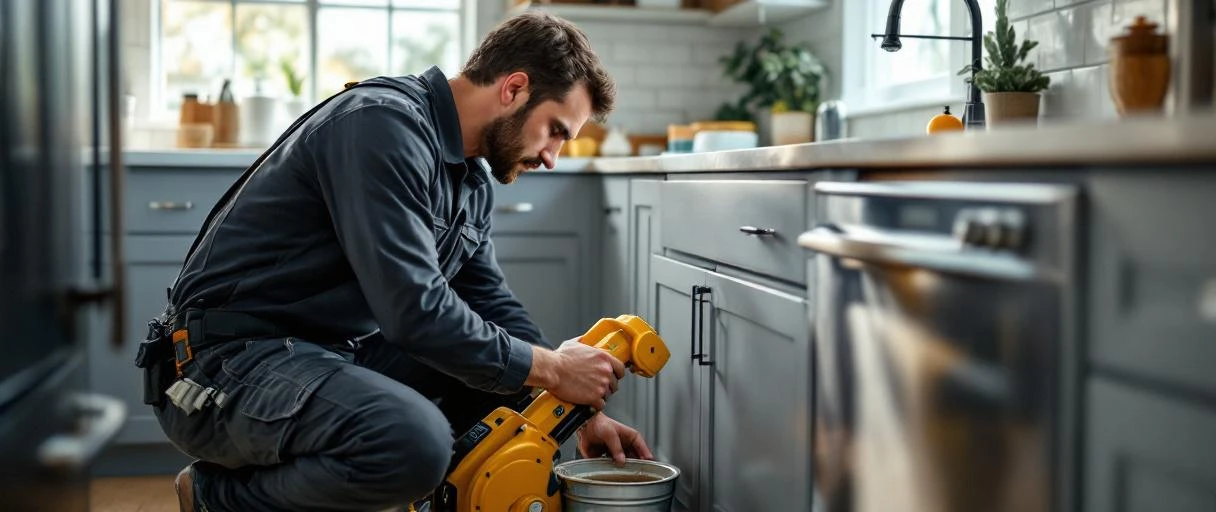
A single drain that won’t clear — a kitchen sink full of dishwater, a shower with standing water, a tub draining at half speed — is among the most common plumbing emergencies in Cincinnati. Emergency Drain Cleaning Cincinnati OH dispatch handles single-fixture clogs on kitchen sinks, bathroom sinks, showers, tubs, garbage disposals, floor drains, and laundry standpipes. Cincinnati’s water hardness, cast iron drain stock in pre-1960 housing, and S-trap configurations leftover from older builds drive characteristic clog patterns we see repeatedly across the city.
Why That One Drain Keeps Backing Up
The full scope of urgent plumbing service we run across every emergency category sits on our main page, including the licensing, pricing, and after-hours coverage details that apply to drain work as well. Drain calls cluster around weekend entertaining, holiday meal prep, and post-storm fixture overuse — all moments when household drainage hits peak load and a partially-clogged line finally backs up.
A single fixture backing up while others work normally points to a branch-line issue — usually within 5 feet of the fixture trap. Cincinnati’s water hardness of 120–150 mg/L accelerates soap scum and mineral buildup in bathroom drains, shortening typical clog intervals to 18–36 months versus 4+ years in soft-water markets. Kitchen drains see grease, food particles, and detergent buildup at the trap and trap arm. Tubs and showers see hair binding with soap scum at the strainer or first elbow.
When every drain in the house is backing up at once rather than one isolated fixture, the work moves to sewer line backup Cincinnati OH scope with camera inspection and main-line cabling through the cleanout. The branch-vs-main distinction is the first triage call we make — different equipment, different scope, different price point.
Single-Fixture Clogs vs Main Line Trouble
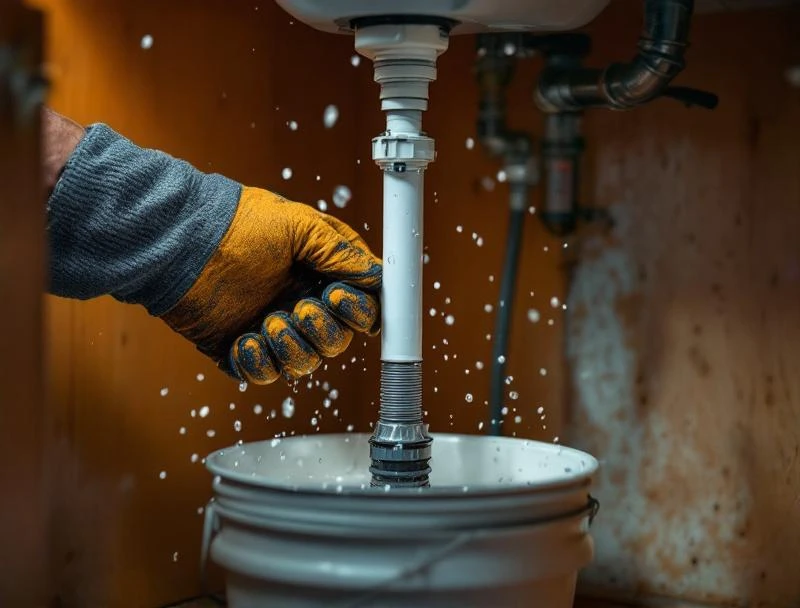
Roughly 70% of Cincinnati emergency drain cleaning calls we run on single fixtures resolve at the trap or trap arm — the clog rarely lives more than 5 feet from the fixture for branch-isolated backups. The standard sequence: shut off water at the angle stop, place a bucket under the trap, loosen slip nuts, drop and clean the P-trap, then hand-auger the trap arm if anything is past the trap.
Cast iron branch drains in pre-1960 Cincinnati homes lose roughly 40–60% of their interior diameter to scale buildup over 50+ years. A “clog” in these homes is often actually a fully scaled pipe needing Picote descaling rather than just cabling. Picote miller heads run on flexible drive shafts to mechanically grind scale off the interior pipe walls, restoring effective diameter without replacement.
A clog isolated to the toilet bowl itself is hardware territory rather than branch drain work, and our Cincinnati toilet repair page covers toilet auger work, flapper and fill valve issues, and wax ring resets. The toilet trap is part of the fixture; clogs past the toilet trap are branch-line scope.
Kitchen Sink, Bath, Shower, and Tub Failures We Clear
Kitchen sinks see grease, food particles, and detergent buildup at the trap arm. We pull the trap, hand-auger the trap arm, and cable through the under-sink cleanout if the obstruction is beyond reach. Garbage disposal jams cluster around Thanksgiving and Christmas — turkey skin, potato peels, and celery being the top three causes seen on holiday-week service tickets. Disposal jams clear with the bottom hex wrench in 60 seconds; replacement runs $300–$600 if the motor is burned out.
Bathroom sinks see hair, soap scum, and toothpaste residue. The pop-up assembly often catches debris and just needs cleaning. We pull the pop-up, clear the buildup, and run a small auger if the trap arm is partially blocked. Showers and tubs see hair as the dominant clog material — strainer cleaning, hand auger through the strainer or overflow plate, and trap clearing handles most cases.
Floor drains in basements (laundry, utility, water-heater catch pans) clog from sediment, lint, and pet hair. We snake from the floor drain or, if the line ties into the main below grade, cable from the cleanout. Standing water in dishwashers traces to a clogged garbage disposal connection or a shared branch with the kitchen sink — both branches share a common drain run.
Garbage Disposal Issues
Disposal jams from fibrous food, bone fragments, or foreign objects stop the motor when the impeller plate locks. The bottom hex socket on the disposal turns the motor manually to free the jam; once the impeller spins freely, the reset button on the bottom restores power. Hard objects (silverware, jewelry, bone) stuck in the impeller plate need to come out before the disposal runs again. Burnt motor smell or repeated jams indicate replacement is due.
How Our Crews Diagnose Stubborn Clogs
Repeat clogs in the same line within 30 days indicate a deeper issue — scale buildup, slope problem, vent failure, or partial structural blockage. Camera inspection on the second clog event saves money over multiple repeat cabling visits. The camera identifies cause and we recommend appropriate scope.
When the “drain backup” turns out to be a hidden supply leak above the ceiling soaking through to the room below, locating leaks behind walls calls for acoustic and thermal diagnosis rather than another cabling pass. Misdiagnosis is more common than it should be — water on a basement ceiling looks like drainage backup but the source is often a slow supply leak two rooms away.
Air admittance valves (AAVs) are accepted under the Ohio Plumbing Code as alternative venting on island sinks and difficult-to-vent fixtures. Cincinnati island sinks and remodels often have failed AAVs causing slow drains and gurgles that mimic clogs. We test by replacing the AAV temporarily — if symptoms resolve, the AAV is the cause. Replacement runs $125–$200.
Cabling, Augering, and Branch-Line Jetting Methods
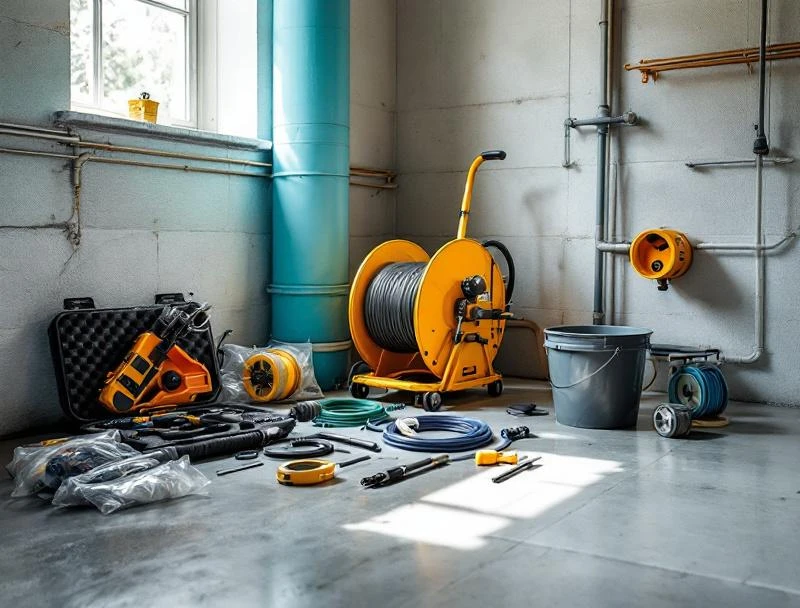
Hand augers (closet auger for toilets, sink auger for sinks and tubs) handle the most common clog locations within 5 feet of the fixture. Drum machines (Ridgid K-39 or K-400) extend reach to 25–75 feet through cleanouts on longer branches. Sectional machines (Spartan, General) handle main-line work but rarely on single-fixture branches. Branch-line jetters at 1500–2500 PSI flush grease-laden kitchen lines clean.
Kitchen sinks and tubs back up most often on weekend evenings during heavy household use, and an after-hours plumber in Cincinnati on rotating dispatch handles drain cabling at the same rates as any other emergency call. Drum machines, hand augers, and replacement P-traps stay on every truck for next-call readiness.
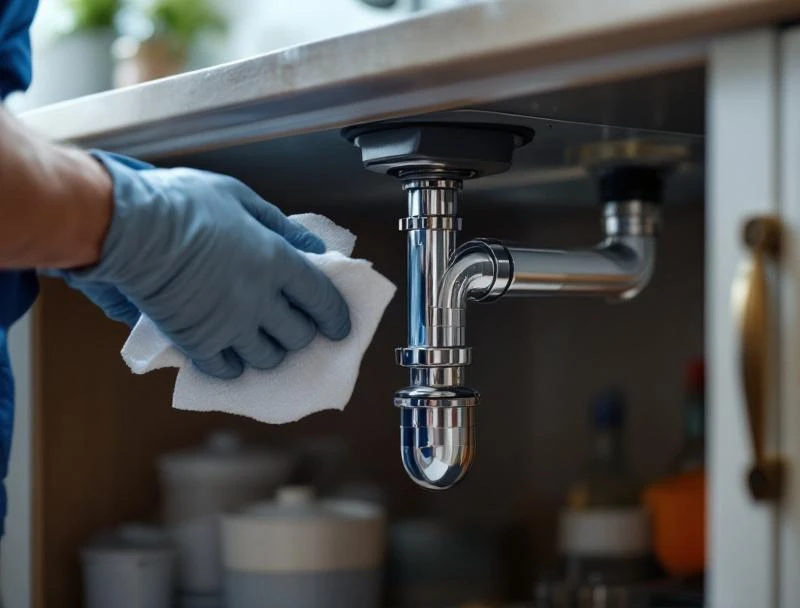
S-traps in pre-1970 Cincinnati homes are non-vented and can siphon dry under flow, breaking the trap seal. Once exposed during a repair or replacement, the Ohio Plumbing Code requires upgrade to a properly vented P-trap with appropriate venting. We surface this on every S-trap we encounter and recommend code-compliant upgrade.
Pricing for Clogged Drain Service in Hamilton County
Standard kitchen sink clog (cable through cleanout): $175–$350. Bathroom sink or shower clog (hand auger or cable): $150–$300. Tub drain via overflow access: $200–$400. Garbage disposal unjam: $125–$250. Garbage disposal replacement: $300–$600. Branch-line jetting: $300–$650. Cast iron Picote descaling: $500–$1,200. P-trap replacement: $200–$400. Repeat-clog camera diagnostic: $250–$450.
S-trap to P-trap code upgrade with proper venting: $400–$900 depending on accessibility. AAV replacement on island sinks or remodels: $125–$200.
Why Chemical Cleaners Make Things Worse
Liquid drain cleaners (sodium hydroxide-based) damage older Cincinnati cast iron and galvanized drains faster than the clog itself. The chemistry generates heat that softens pipe seals and damages rubber gaskets in trap and AAV components. Caustic residue creates safety hazards for plumbers cabling through afterward — protective equipment is required when chemical residue is present, and many shops charge a service premium for chemically-saturated lines.
Mechanical clearing — auger, cabling, jetting — is the right tool for active clogs. Enzyme-based maintenance products (Bio-Clean type) safely break down organic buildup over time but won’t clear an active backup. The active backup is mechanical work; enzyme products are preventive maintenance.
Preventing the Next Backup in Older Cincinnati Homes
Annual or biennial preventive cabling on heavy-use kitchen lines extends clog-free intervals significantly. Cast iron drains in pre-1960 homes benefit from annual Picote descaling to keep effective diameter at full spec. Replacing pop-up assemblies on bathroom sinks every 5–8 years prevents biofilm buildup that catches debris. Enzyme cleaner monthly maintenance dose on slow-draining lines keeps organic buildup minimal between professional cleanings.
The Ohio Plumbing Code requires a cleanout within 5 feet of trap arms over 5 feet long — most Cincinnati homes built pre-1980 lack accessible cleanouts on bathroom branches, forcing cabling through the fixture itself. Adding cleanouts during any drain work makes future service faster and cheaper.
OCILB master plumber credential is required for permits on any drain replacement. License verification at license.ohio.gov shows status, expiration, and any disciplinary history. The licence number appears on every invoice the plumber issues.
Need a Cincinnati Plumber Now?
Licensed · Bonded · Available 24/7
See Our Emergency Drain Cleaning Cincinnati OH Work in Cincinnati
Network Service Guarantees
- Written estimate before work begins
- All parts and labour warranted
- Licensed Ohio plumbers — verify at license.ohio.gov
- Same-day emergency service available 24/7
Pricing in Hamilton County
| Service | Cincinnati Range | Time Required |
|---|---|---|
| Kitchen sink clog (cable through cleanout) | $175–$350 | 30–60 min |
| Bathroom sink/shower clog | $150–$300 | 30–60 min |
| Tub drain (overflow access) | $200–$400 | 1 hour |
| Garbage disposal unjam | $125–$250 | 30 min |
| Garbage disposal replacement | $300–$600 | 1–2 hours |
| Branch-line jetting | $300–$650 | 1–2 hours |
| Cast iron descaling (Picote) | $500–$1,200 | 2–4 hours |
| P-trap replacement (single fixture) | $200–$400 | 1 hour |
| Repeat-clog camera diagnostic | $250–$450 | 30–60 min |
← Scroll to see more →
DIY vs Licensed Plumber
| Aspect | DIY Attempt | Licensed Plumber |
|---|---|---|
| Code compliance | Often fails inspection | Built to Ohio code |
| Permit | Not pulled | Cincinnati permit + inspection |
| Pressure test | Skipped | 100 PSI / 15 min per OPC 312 |
| Insurance | May void coverage | Licensed work covered |
| Warranty | No warranty | Parts and labour warranted |
| Recurrence rate | High (no diagnosis) | Low (root cause addressed) |
← Scroll to see more →
Get a Written Estimate Before Work Begins
Licensed Ohio plumbers — verify at license.ohio.gov
Without Professional Service
- Water damage continues spreading
- Larger repair bill comes later
- No permits pulled (insurance issues)
- Unlicensed work fails inspection
With a Licensed Network Plumber
- Fast emergency response time
- Proper repair to Ohio code
- Permits pulled when required
- Work guaranteed and warranted
Cincinnati-Specific Considerations
Cincinnati's housing stock is mixed — pre-1940 ~30%, 1940–1970 ~25%, post-1970 the balance. Each era has characteristic plumbing materials and failure modes. Pre-1940 homes in Northside, Price Hill, Walnut Hills, and Norwood frequently have galvanized supply and cast iron drain still in active service. Mid-century stock has Type M copper hitting end of life now. Suburban slab-on-grade in West Chester, Mason, Liberty Township concentrates slab-leak risk on copper-rebar contact points.
Greater Cincinnati Water Works delivers water at 120–150 mg/L hardness with chloramine disinfection (since 2015). The combination accelerates anode rod consumption, shortens Type M copper service life, and produces characteristic mineral buildup in drain lines. Cincinnati's 30 average freeze days per year drive winter freeze and burst events clustered between January and February. Polar vortex stretches push freeze risk into normally safe interior wall locations.
Cincinnati water and infrastructure
Ohio Licensing and Code Compliance
Every plumbing contractor in Ohio holds an OCILB master plumber licence (or works under one). The Ohio Construction Industry Licensing Board maintains a public lookup at license.ohio.gov — search by contractor name or licence number to verify status, expiration, and any disciplinary history. Cincinnati Department of Buildings handles permits inside city limits; Hamilton County Building Department covers unincorporated areas and townships.
The Ohio Plumbing Code (Ohio Administrative Code 4101:3) is the adopted IPC with Ohio amendments. Pressure test requirements, expansion tank mandates on closed systems with PRV or check valve, lead-free solder on all repair joints, and proper venting on every fixture all apply to emergency repair work the same as scheduled work. The Ohio Plumbing Code allows up to 72 hours to file emergency-work permits with Cincinnati Department of Buildings, giving overnight crews legal cover for after-the-fact filing.
License verification
Frequently Asked Questions
Related Services
Sewer Line Backup Cincinnati OH
Sewer line backup in Cincinnati OH? We camera, jet, and clear main lines fast. Network plumbers handle MSD-side coordination too. Call now.
Learn More →Emergency Toilet Repair Cincinnati OH
Need emergency toilet repair in Cincinnati OH? Licensed plumbers in our network fix overflows, leaks, and flush failures fast on every brand. Call now.
Learn More →24 Hour Plumber Cincinnati OH
Looking for a 24 hour plumber in Cincinnati OH? Licensed plumbers in our network dispatch overnight, weekends, and holidays. Call any hour for fast help.
Learn More →