
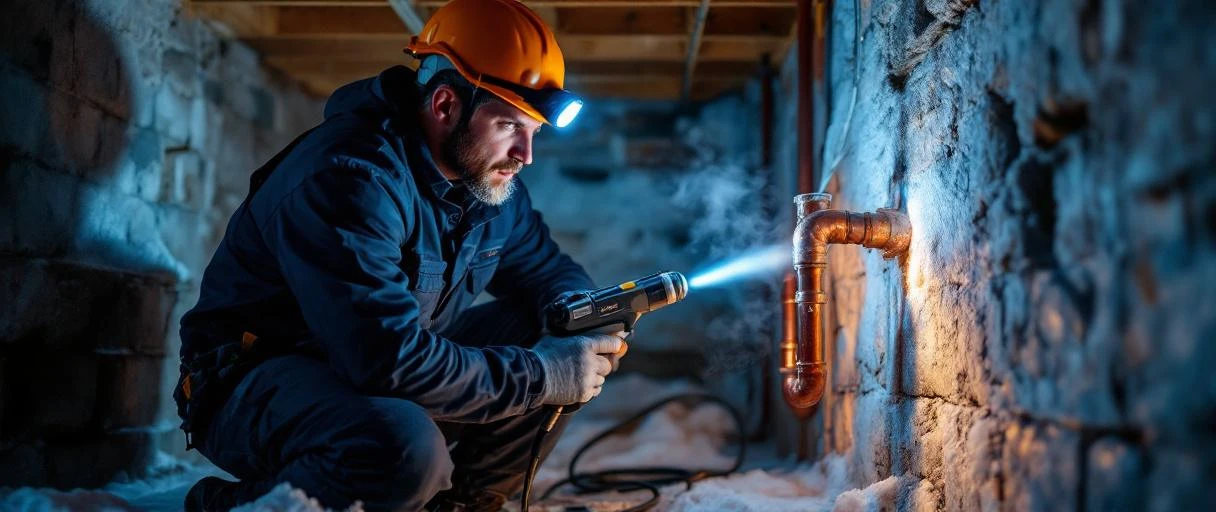
A frozen pipe is a window of opportunity to prevent a burst. Once water flow stops at a fixture during sub-freezing weather, the homeowner has hours — sometimes minutes — to thaw the line before pressure behind the ice plug splits the pipe. Frozen Pipe Repair Cincinnati OH dispatch handles thawing, post-thaw pressure verification, hidden-split inspection, and prevention work like heat trace install and rim joist air sealing. Cincinnati’s roughly 30 freeze days per year and recurring polar vortex stretches make this scope a winter staple.
Why Cincinnati’s Freeze-Thaw Cycle Targets Certain Pipes
Cincinnati averages around 30 freeze days per year, with peak burst-event clustering between January 5 and February 20. Cold-snap nights produce call surges that our around-the-clock dispatch handles by routing the closest available crew with thawing equipment and standard repair kits already loaded on the truck. Roughly 60–70% of freeze bursts happen between 2 AM and 8 AM when pipes hit their coldest after a long overnight.
Pre-1980 Cincinnati housing stock often lacks adequate exterior wall insulation. Crawl space construction was common in 1940s–1970s suburbs (Norwood, Reading, Wyoming) — supply lines run exposed under the floor with vented crawl spaces that drop to outdoor air temperature during cold snaps. The Cincinnati frost line is 30–36 inches per local building amendments; pre-1970 homes often have water services buried at only 18–24 inches and are persistent freeze risks.
Polar vortex events (2014, 2019, 2022, and the early 2025 stretch) reached -10°F to -20°F in Cincinnati and pushed freeze risk into spaces that are normally safe — interior bath walls, behind kitchen cabinets, plumbing chases that pass through unconditioned attic space. These extreme stretches generate 8–10x normal call volumes overnight.
Spotting a Frozen Line Before It Splits
The first symptom of a freeze is no flow at one fixture during sub-freezing temperatures. Open the faucet — if no water comes through and the rest of the house is fine, a freeze somewhere on that branch is likely. Frost on accessible copper confirms the location. Bulged copper sections (visibly swollen along the pipe length) indicate ice expansion has already deformed the pipe — replacement of the bulged section is needed even if the pipe hasn’t burst yet.
Pipes split when ice expands behind a closed faucet — leaving the faucet dripping during sub-zero stretches relieves pressure and prevents most bursts even when freezing still occurs. PEX has roughly 3–4x the freeze expansion tolerance of copper, so a Cincinnati home with PEX may freeze without splitting while a copper home in identical conditions bursts.
The split usually happens at thaw, not at freeze. As the ice plug starts to melt, water pressure returns to a section of pipe weakened by ice expansion, and the weakest joint or pipe wall fails. That’s why post-thaw inspection matters — we walk the entire run looking for stains, drips, or wet spots after every thaw.
Safe Thawing Methods for Copper and PEX
Open the downstream faucet first. This relieves pressure as the ice begins to melt. Apply controlled heat with a heat gun (1500W), hair dryer, or electric pipe-thawing blanket. Work from the faucet end backward toward the freeze — meltwater flows out the open faucet and prevents trapped pressure pockets. Never use open flame, propane torch, or kerosene heater on pipes. Fire risk is real (most house fires from frozen-pipe DIY are flame-driven) and the heat damages pipe and surrounding materials.
Hothead pipe-thawing machines pass low-voltage electrical current through copper supply lines, heating the pipe from inside. Effective on copper only (PEX doesn’t conduct), and limited to lines with proper grounding paths. Network plumbers use hothead machines on accessible copper runs for fast thawing — $300–$650 service. Electric pipe-thawing blankets wrap around accessible pipe and provide even heat over the wrapped length.
For freezes inside walls, thermal imaging finds the cold spot, drywall is opened with a clean access patch, controlled heat applies until flow returns, and the patch is left ready for drywall trade follow-up. Drywall cut adds significant time and scope to the thaw, raising the cost to $400–$900.
Hidden Splits — Checking the Line After It Thaws
Once flow returns, the work isn’t done. The pressure-restored line may have a hairline split that wasn’t visible during the freeze. We walk the entire run looking for water stains, drips, or wet spots. Pressure-test the section if any doubt remains — Ohio Plumbing Code requires 100 PSI for 15 minutes on supply line work.
When the thaw reveals a longitudinal split copper line, the repair shifts to cut-and-replace work with proper pressure testing before re-pressurizing the system. The cross-link between frozen-but-intact (this scope) and already-burst (burst pipe scope) keeps the right workflow on each call.
When a thaw produces no visible spray but the meter still spins after the repair, slab leak detection with acoustic and thermal equipment confirms whether a hairline split has opened beneath finished flooring. Slab supply lines that froze and re-thawed sometimes develop pinhole leaks that don’t surface for hours or days — meter monitoring catches these.
Exterior Walls, Crawl Spaces, and Unheated Garages
The highest-risk locations in Cincinnati housing are exterior walls (especially north and west exposures), crawl spaces with open vents, unheated garages with washing machine or utility sink connections, and rim joists where air infiltrates into otherwise-conditioned space. Pre-1970 homes have inadequate insulation in all these locations.
Most freeze events surface between 2 AM and 8 AM during the coldest stretch of the night, and a round-the-clock plumber on rotating dispatch can roll a truck before the homeowner sees full damage. Early dispatch lets us thaw before a burst, rather than respond to active flooding.
Frost-proof sillcocks (long-stem yard hydrants) move the shutoff valve inside the heated wall, so the exposed exterior portion drains when shut off. Standard exterior hose bibbs are vulnerable to freeze and a common cause of basement flooding events from interior-side line failures. Frost-proof retrofit runs $250–$450 per sillcock.
Pricing for Cold-Weather Plumbing Work
Single accessible line thaw: $200–$450. In-wall freeze with drywall cut: $400–$900. Hothead-machine thaw: $300–$650. Thaw with burst repair: $500–$1,500. Heat trace install per fixture: $250–$500. Whole crawl/basement insulation: $500–$1,500. Frost-proof sillcock retrofit: $250–$450. Whole-house winterization (insulation + air sealing + heat trace as needed): $400–$800. Rim joist air sealing: $300–$700.
Polar vortex stretches generate higher call volume and longer wait times. We pre-position trucks based on forecast cold-air mass arrival when extreme cold is in the forecast.
Long-Term Freeze Prevention for Older Cincinnati Homes
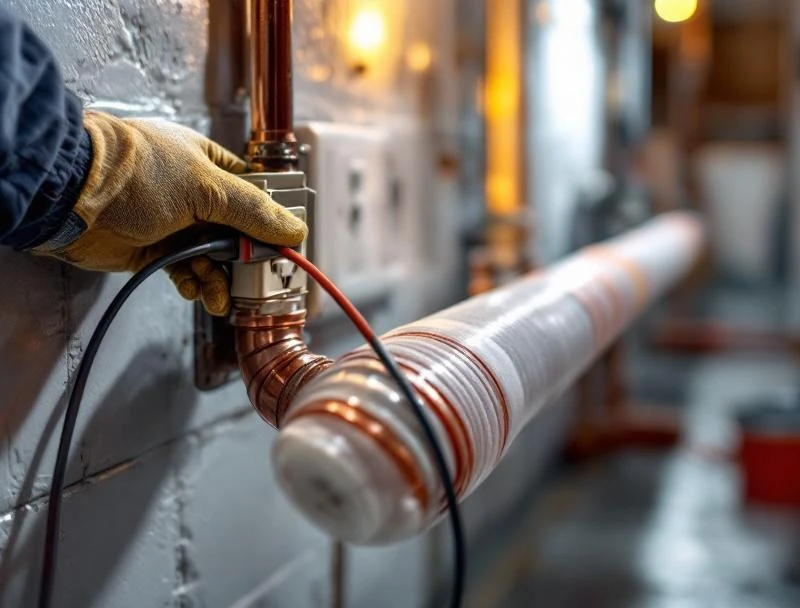
Foam pipe insulation sleeves are the cheapest and most effective prevention for accessible pipe. UL-listed self-regulating heat trace cable on GFCI circuits handles persistent re-freezers — areas where the same line freezes every winter despite insulation. Rim joist air sealing addresses infiltration that drives crawl space and basement temperatures down.
Discharge lines that freeze at the exterior turn into a Cincinnati pump emergency when the next storm hits, so we add freeze guards on the same visit when a sump system needs winterization. Sump discharge ice-up is a common but preventable cause of basement flooding during winter storms — a freeze guard on the exterior discharge keeps the line clear.
Heat tape installed in Cincinnati must be UL-listed and on a GFCI circuit per Ohio Electrical Code. Hardware-store generic tape is a common code violation found on existing installs — we replace with proper UL-listed self-regulating cable when discovered.
When the Pipe Has Already Burst — What Changes
Active visible water during freeze season is burst-pipe scope, not frozen-pipe scope. The line has split, water is flowing, and the work is cut-and-replace rather than thaw. We route burst-pipe calls to the burst-pipe workflow with proper pressure testing and section replacement. Frozen-but-intact lines route to thawing. The cross-link framing keeps each call routed correctly.
Cincinnati Department of Buildings allows up to 72 hours to file emergency permits for pipe replacement triggered by freeze events. We document scope at the time of repair so next-day filing is straightforward and the work passes inspection cleanly. OCILB master plumber credential is required for permits. License verification at license.ohio.gov shows status and expiration. The licence number appears on every invoice the plumber issues.

Need a Cincinnati Plumber Now?
Licensed · Bonded · Available 24/7
See Our Frozen Pipe Repair Cincinnati OH Work in Cincinnati
Network Service Guarantees
- Written estimate before work begins
- All parts and labour warranted
- Licensed Ohio plumbers — verify at license.ohio.gov
- Same-day emergency service available 24/7
Pricing in Hamilton County
| Service | Cincinnati Range | Time Required |
|---|---|---|
| Locate and thaw single line (accessible) | $200–$450 | 1–2 hours |
| Thaw in-wall freeze (drywall cut) | $400–$900 | 2–4 hours |
| Thaw with hothead machine | $300–$650 | 1–2 hours |
| Thaw plus burst section repair | $500–$1,500 | 2–4 hours |
| Heat trace install (per fixture) | $250–$500 | 1–2 hours |
| Pipe insulation (full crawl/basement) | $500–$1,500 | 2–4 hours |
| Frost-proof sillcock retrofit | $250–$450 | 1–2 hours |
| Whole-house winterization service | $400–$800 | 2–3 hours |
| Rim joist air sealing (freeze prevention) | $300–$700 | 2–3 hours |
← Scroll to see more →
DIY vs Licensed Plumber
| Aspect | DIY Attempt | Licensed Plumber |
|---|---|---|
| Code compliance | Often fails inspection | Built to Ohio code |
| Permit | Not pulled | Cincinnati permit + inspection |
| Pressure test | Skipped | 100 PSI / 15 min per OPC 312 |
| Insurance | May void coverage | Licensed work covered |
| Warranty | No warranty | Parts and labour warranted |
| Recurrence rate | High (no diagnosis) | Low (root cause addressed) |
← Scroll to see more →
Get a Written Estimate Before Work Begins
Licensed Ohio plumbers — verify at license.ohio.gov
Without Professional Service
- Water damage continues spreading
- Larger repair bill comes later
- No permits pulled (insurance issues)
- Unlicensed work fails inspection
With a Licensed Network Plumber
- Fast emergency response time
- Proper repair to Ohio code
- Permits pulled when required
- Work guaranteed and warranted
Cincinnati-Specific Considerations
Cincinnati's housing stock is mixed — pre-1940 ~30%, 1940–1970 ~25%, post-1970 the balance. Each era has characteristic plumbing materials and failure modes. Pre-1940 homes in Northside, Price Hill, Walnut Hills, and Norwood frequently have galvanized supply and cast iron drain still in active service. Mid-century stock has Type M copper hitting end of life now. Suburban slab-on-grade in West Chester, Mason, Liberty Township concentrates slab-leak risk on copper-rebar contact points.
Greater Cincinnati Water Works delivers water at 120–150 mg/L hardness with chloramine disinfection (since 2015). The combination accelerates anode rod consumption, shortens Type M copper service life, and produces characteristic mineral buildup in drain lines. Cincinnati's 30 average freeze days per year drive winter freeze and burst events clustered between January and February. Polar vortex stretches push freeze risk into normally safe interior wall locations.
Cincinnati water and infrastructure
Ohio Licensing and Code Compliance
Every plumbing contractor in Ohio holds an OCILB master plumber licence (or works under one). The Ohio Construction Industry Licensing Board maintains a public lookup at license.ohio.gov — search by contractor name or licence number to verify status, expiration, and any disciplinary history. Cincinnati Department of Buildings handles permits inside city limits; Hamilton County Building Department covers unincorporated areas and townships.
The Ohio Plumbing Code (Ohio Administrative Code 4101:3) is the adopted IPC with Ohio amendments. Pressure test requirements, expansion tank mandates on closed systems with PRV or check valve, lead-free solder on all repair joints, and proper venting on every fixture all apply to emergency repair work the same as scheduled work. The Ohio Plumbing Code allows up to 72 hours to file emergency-work permits with Cincinnati Department of Buildings, giving overnight crews legal cover for after-the-fact filing.
License verification
Frequently Asked Questions
Related Services
Burst Pipe Repair Cincinnati OH
Need burst pipe repair in Cincinnati OH? Licensed plumbers in our network stop the leak, replace the section, and pressure-test the line. Call now.
Learn More →Sump Pump Repair Cincinnati OH
Sump pump failed in Cincinnati OH? Licensed plumbers in our network replace pumps, install backups, and stop basement flooding fast. Call now.
Learn More →24 Hour Plumber Cincinnati OH
Looking for a 24 hour plumber in Cincinnati OH? Licensed plumbers in our network dispatch overnight, weekends, and holidays. Call any hour for fast help.
Learn More →