
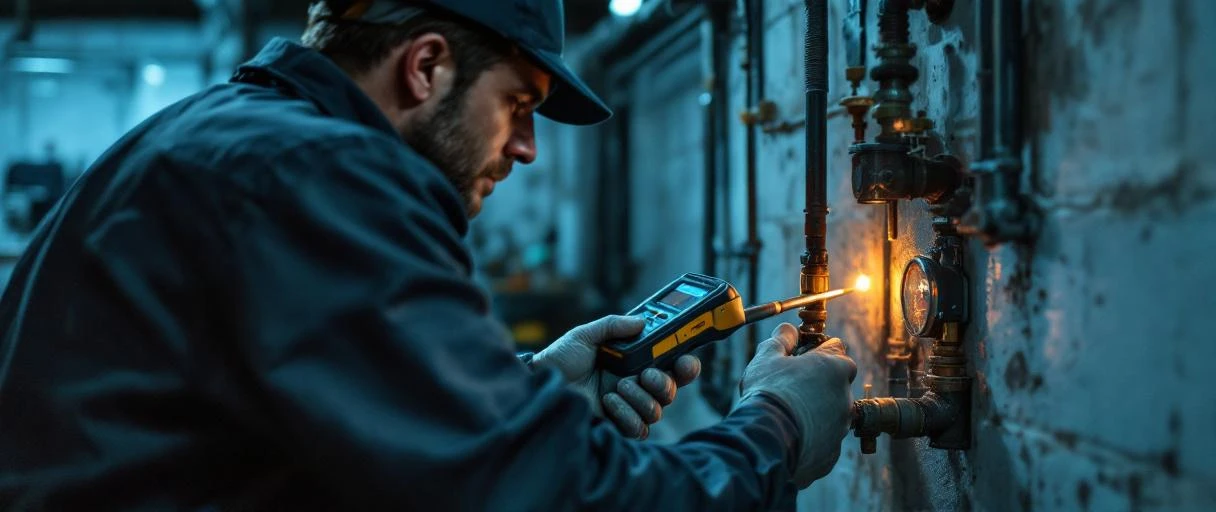
Gas line work is the most safety-critical scope in residential plumbing. Every joint, every fitting, every CSST run carries the potential for a leak that ranges from inconvenience to immediate evacuation. Gas Leak Detection Cincinnati OH dispatch handles combustible gas detection, pressure testing per Ohio code, black iron pipe repair, CSST installation and bonding, flexible appliance connector replacement, sediment trap retrofits, and gas appliance hookup. Every gas job runs under OCILB master plumber permit and Cincinnati Department of Buildings inspection. There is no shortcut on this work.
When You Smell Gas — What to Do First
Mercaptan — the rotten-egg odorant added to natural gas — is the homeowner’s first warning. The protocol is non-negotiable: evacuate the building first, call 911 from outside, then call Columbia Gas of Ohio’s 24-hour leak line. Do not turn on lights, switches, appliances, or any electrical device. Sparks can ignite accumulated gas and what was a leak becomes an explosion.
After 911 and Columbia Gas, the next call goes to a licensed plumber, and an anytime plumber on rotating dispatch handles non-Grade-1 leaks the same night they’re reported. Columbia Gas owns the service line up to and including the meter; they handle the immediate-hazard response. Once the immediate hazard is cleared and the leak is on the customer side (past the meter), a licensed Ohio plumber handles the line repair under permit.
Mercaptan can fade in long-buried lines or be partially absorbed by soil. A serious leak underground may not produce a strong smell at the surface. Combustible gas detector testing is required to verify — smell alone is not a reliable absence-of-leak signal. We sweep all accessible piping with a calibrated detector on every gas-call.
Common Sources of Residential Gas Leaks
The most common leak locations in Cincinnati housing: threaded joints in black iron pipe (especially older installs in wet basement environments), flexible appliance connectors past their service life (range, dryer, water heater), corroded gas valves at appliance shutoffs, CSST without proper electrical bonding (lightning-strike vulnerability), unbonded CSST that has been struck and punctured, and pinhole-corroded sections of black iron in pre-1970 wet-basement runs.
When the leak traces to the gas valve at the water heater itself rather than the supply line, the work shifts toward Cincinnati water heater repair scope if the unit is past serviceable life. Gas valve replacement on a 6-year-old water heater is appropriate; gas valve replacement on a 14-year-old water heater is throwing money at a unit due for full replacement.
Black iron gas pipe in pre-1970 Cincinnati homes often runs through wet basement environments and is reaching corrosion-driven end of life. Pinhole leaks are increasingly common in homes with original 1950s gas distribution. We document the condition during repair and recommend full re-pipe when finding multiple corrosion points.
Pressure Testing and Combustible Gas Detectors
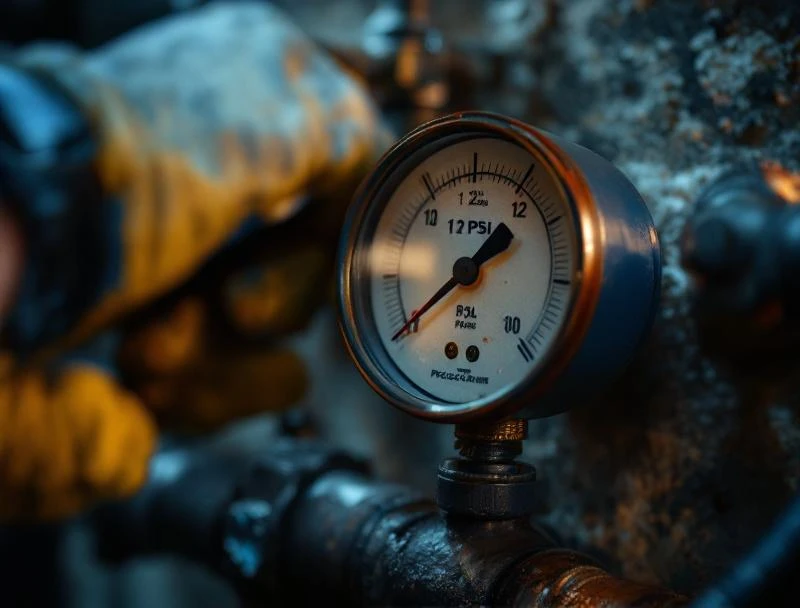
The Ohio Plumbing Code (referencing IFGC) requires a 10–15 PSI air pressure test on new gas piping held for 15 minutes minimum. Many handyman gas hookups skip this entirely. We don’t. Setup involves isolating the test zone with valves or caps, pressurizing with air, and watching the gauge for any drop over the hold period. Any drop = leak somewhere in the tested section.
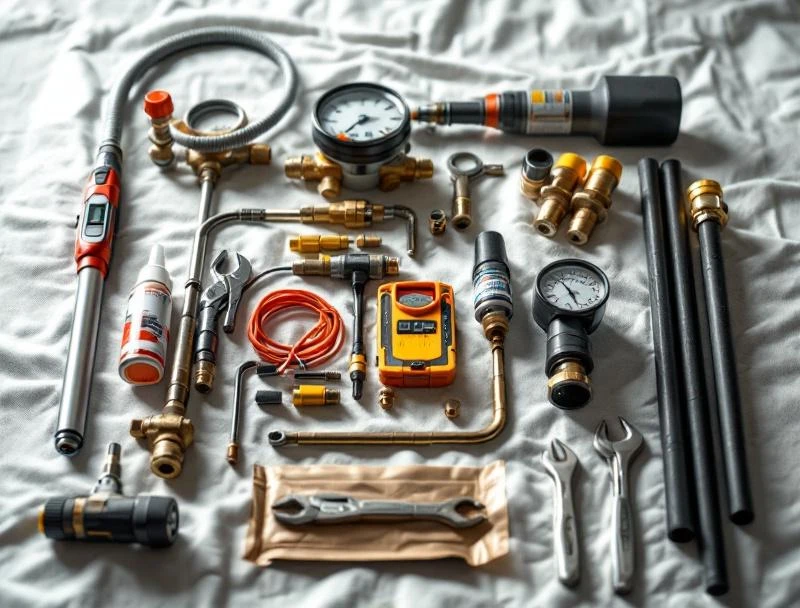
Combustible gas detectors (Bacharach Informant 2, UEi CD100A) sweep all accessible piping for hydrocarbon presence. The detector audibly and visually indicates concentration. Soap-bubble testing applied to suspect fittings produces visible bubbles at active leaks. Combined with pressure testing, the detection methods provide redundant confirmation before any repair work.
Manometer readings (Dwyer 475, Testo 510) verify proper supply pressure at appliances. Tankless water heaters in particular require precise pressure verification with a manometer at the unit, not at the meter. Cincinnati Columbia Gas typically delivers 7” water column on natural gas. Improper pressure produces yellow flame, ignition lockouts, and incomplete combustion.
Black Iron, CSST, and Flexible Connectors
Black iron pipe is the traditional gas distribution material. Threaded joints with approved gas-pipe sealant (Rectorseal T plus 2 — never PTFE tape on flare fittings). Pipe wrenches and pipe vises for proper installation tightness. Long service life when the environment is dry; reaches corrosion end-of-life faster in wet basements. Section replacement runs $400–$800 for a 5-foot run.
CSST (Gastite, TracPipe, HOME-FLEX, FlashShield) is flexible stainless steel tubing common in 1990s+ Cincinnati builds. The flexibility enables faster install through framing and around obstacles. The downside: lightning strikes can puncture unbonded CSST, and improperly installed CSST creates lightning-strike vulnerability. The Ohio Electrical Code (250.104) and CSST manufacturer requirements have required bonding to grounded service since 2008. Pre-2008 CSST installs in Cincinnati frequently lack proper bonding — found in roughly half of pre-2008 installs we test. Bonding retrofit runs $300–$600.
Flexible appliance connectors (BrassCraft, Dormont) connect rigid gas piping to appliances (range, dryer, water heater). CSA-certified connectors have a defined service life — typically 5–10 years for residential use. Older flexible connectors crack and develop leaks at the crimp ends. Replacement runs $150–$300 per appliance.
Columbia Gas Coordination on the Meter Side
Columbia Gas of Ohio owns from the public main up to and including the meter. The homeowner owns from the meter outlet onward — house line, branch lines, appliance connections. Columbia Gas’s 24-hour emergency line handles meter-side issues, leak grading, and immediate-hazard response. Their crew arrives, makes the situation safe, and either repairs (utility side) or tags for licensed plumber follow-up (customer side).
Columbia Gas classifies leaks as Grade 1 (immediate hazard requiring evacuation), Grade 2 (probable future hazard, scheduled repair), or Grade 3 (non-hazardous, monitored). Only Grade 1 triggers utility-funded immediate response. Grade 2 leaks are routed to licensed plumbers, often overnight.
811 / Ohio Utilities Protection Service requires 48-hour notice before any digging that could affect gas lines. Emergency excavation rules allow same-day excavation with Columbia Gas dispatched on-site for line marking. We coordinate the 811 call on every excavation scope.
Pricing for Gas Line Service in Hamilton County
Gas leak diagnostic plus pressure test: $200–$400. Single fitting or valve replacement: $250–$500. Flexible connector replacement per appliance: $150–$300. Black iron section replacement (5 ft): $400–$800. CSST installation (new run, 20 ft): $600–$1,200. CSST bonding retrofit: $300–$600. Whole-house gas re-pipe: $3,500–$8,000. Gas appliance hookup (range, dryer, water heater): $200–$450. Permit and inspection: $75–$200.
Cincinnati Department of Buildings handles permits within city limits. Hamilton County Building Department covers unincorporated areas. The permit triggers an inspection before re-light. Going around the permit means the gas may not legally be restored to that section even if the repair is sound.
Code Requirements for Gas Work in Ohio
Our full service scope including licensing, after-hours coverage, and code compliance — Emergency Plumber Cincinnati, our main page — covers details that apply to every emergency category we handle. Gas work specifically is regulated by Ohio Plumbing Code section 1201–1212 (referencing IFGC), Ohio Mechanical Code (gas appliance venting), and the National Fuel Gas Code (NFPA 54).
OCILB master plumber credential is required for permits on any gas work past the meter. The Ohio Electrical Code section 250.104 requires CSST bonding to grounded service. NFPA 54 / Ohio code requires sediment traps (drip legs) on every gas appliance connection — a code item missing on roughly 40% of older Cincinnati installs and frequently flagged on home inspections.
The Ohio Plumbing Code requires a 10–15 PSI air pressure test on new gas piping held for 15 minutes minimum. After repair, we re-test before re-lighting any appliance. Sediment trap installation is part of every appliance connection or replacement we do.
After the Repair — Re-Light and Verification
Once the repair passes pressure test, we restore gas service to the section, re-light all pilots, and verify proper combustion at every appliance affected by the gas-off event. Combustion verification means a crisp blue flame with no yellow tipping (yellow indicates incomplete combustion and potential CO production). We check water heater, furnace, range, dryer, and any other gas appliance in the gas-off zone.
When a gas-line repair coincides with a wet basement environment driven by a burst water line, our Cincinnati pipe repair scope addresses the water side before re-lighting any gas appliance in the affected area. Gas appliances should not be re-lit in standing water or actively wet environments.
Cincinnati Department of Buildings inspector verifies the work in 1–3 business days after permit filing. The inspector reviews scope, joints, pressure test documentation, and any code-flagged items (sediment traps, CSST bonding). Approved inspection releases the permit and closes the work order. License verification at license.ohio.gov shows status, expiration, and any disciplinary history. The licence number appears on every invoice the plumber issues.
Need a Cincinnati Plumber Now?
Licensed · Bonded · Available 24/7
See Our Gas Leak Detection Cincinnati OH Work in Cincinnati
Network Service Guarantees
- Written estimate before work begins
- All parts and labour warranted
- Licensed Ohio plumbers — verify at license.ohio.gov
- Same-day emergency service available 24/7
Pricing in Hamilton County
| Service | Cincinnati Range | Time Required |
|---|---|---|
| Gas leak diagnostic / pressure test | $200–$400 | 1–2 hours |
| Single fitting / valve replacement | $250–$500 | 1 hour |
| Flexible connector replacement (per appliance) | $150–$300 | 30–60 min |
| Section of black iron replacement (5 ft) | $400–$800 | 2–3 hours |
| CSST installation (new run, 20 ft) | $600–$1,200 | 3–5 hours |
| CSST bonding retrofit | $300–$600 | 1–2 hours |
| Whole-house gas re-pipe | $3,500–$8,000 | 1–2 days |
| Gas appliance hookup | $200–$450 | 1–2 hours |
| Permit and inspection | $75–$200 | filing only |
← Scroll to see more →
DIY vs Licensed Plumber
| Aspect | DIY Attempt | Licensed Plumber |
|---|---|---|
| Code compliance | Often fails inspection | Built to Ohio code |
| Permit | Not pulled | Cincinnati permit + inspection |
| Pressure test | Skipped | 100 PSI / 15 min per OPC 312 |
| Insurance | May void coverage | Licensed work covered |
| Warranty | No warranty | Parts and labour warranted |
| Recurrence rate | High (no diagnosis) | Low (root cause addressed) |
← Scroll to see more →
Get a Written Estimate Before Work Begins
Licensed Ohio plumbers — verify at license.ohio.gov
Without Professional Service
- Water damage continues spreading
- Larger repair bill comes later
- No permits pulled (insurance issues)
- Unlicensed work fails inspection
With a Licensed Network Plumber
- Fast emergency response time
- Proper repair to Ohio code
- Permits pulled when required
- Work guaranteed and warranted
Cincinnati-Specific Considerations
Cincinnati's housing stock is mixed — pre-1940 ~30%, 1940–1970 ~25%, post-1970 the balance. Each era has characteristic plumbing materials and failure modes. Pre-1940 homes in Northside, Price Hill, Walnut Hills, and Norwood frequently have galvanized supply and cast iron drain still in active service. Mid-century stock has Type M copper hitting end of life now. Suburban slab-on-grade in West Chester, Mason, Liberty Township concentrates slab-leak risk on copper-rebar contact points.
Greater Cincinnati Water Works delivers water at 120–150 mg/L hardness with chloramine disinfection (since 2015). The combination accelerates anode rod consumption, shortens Type M copper service life, and produces characteristic mineral buildup in drain lines. Cincinnati's 30 average freeze days per year drive winter freeze and burst events clustered between January and February. Polar vortex stretches push freeze risk into normally safe interior wall locations.
Cincinnati water and infrastructure
Ohio Licensing and Code Compliance
Every plumbing contractor in Ohio holds an OCILB master plumber licence (or works under one). The Ohio Construction Industry Licensing Board maintains a public lookup at license.ohio.gov — search by contractor name or licence number to verify status, expiration, and any disciplinary history. Cincinnati Department of Buildings handles permits inside city limits; Hamilton County Building Department covers unincorporated areas and townships.
The Ohio Plumbing Code (Ohio Administrative Code 4101:3) is the adopted IPC with Ohio amendments. Pressure test requirements, expansion tank mandates on closed systems with PRV or check valve, lead-free solder on all repair joints, and proper venting on every fixture all apply to emergency repair work the same as scheduled work. The Ohio Plumbing Code allows up to 72 hours to file emergency-work permits with Cincinnati Department of Buildings, giving overnight crews legal cover for after-the-fact filing.
License verification
Frequently Asked Questions
Related Services
Emergency Water Heater Repair Cincinnati OH
Need emergency water heater repair in Cincinnati OH? We diagnose codes, leaks, and pilot failures on tank and tankless units. Call now.
Learn More →Burst Pipe Repair Cincinnati OH
Need burst pipe repair in Cincinnati OH? Licensed plumbers in our network stop the leak, replace the section, and pressure-test the line. Call now.
Learn More →24 Hour Plumber Cincinnati OH
Looking for a 24 hour plumber in Cincinnati OH? Licensed plumbers in our network dispatch overnight, weekends, and holidays. Call any hour for fast help.
Learn More →