
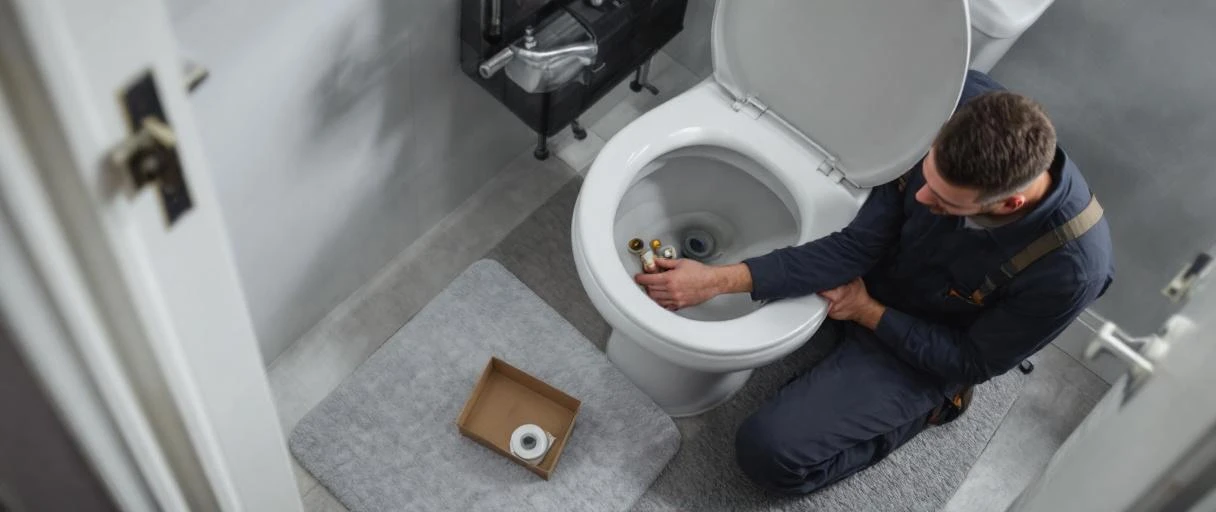
A toilet that won’t flush, an overflowing bowl with water reaching the floor, a constantly running tank wasting hundreds of gallons a day, water seeping at the base — toilet emergencies cluster in the top three most-called residential plumbing categories. Emergency Toilet Repair Cincinnati OH dispatch handles fill valve failures, flush valve breakage, flapper leaks, wax ring failures, closet flange damage, supply line bursts, and full toilet replacement on every major brand. The Ohio Plumbing Code 1.28 GPF mandate applies to any new installation, including like-for-like replacement of older 3.5+ GPF units.
When the Toilet Becomes a Real Emergency
Not every toilet problem warrants an immediate call. A slow-running fill valve or an occasional ghost flush can wait for a scheduled visit. An overflowing bowl with water reaching the floor, a toilet that won’t flush at all on the only toilet in the home, sewer-gas smell from the base, or a rocking toilet that’s been seeping at the seal are urgent. The complete picture of Cincinnati emergency plumbing across every service category, including licensing and after-hours coverage, lives on our main page for full context.
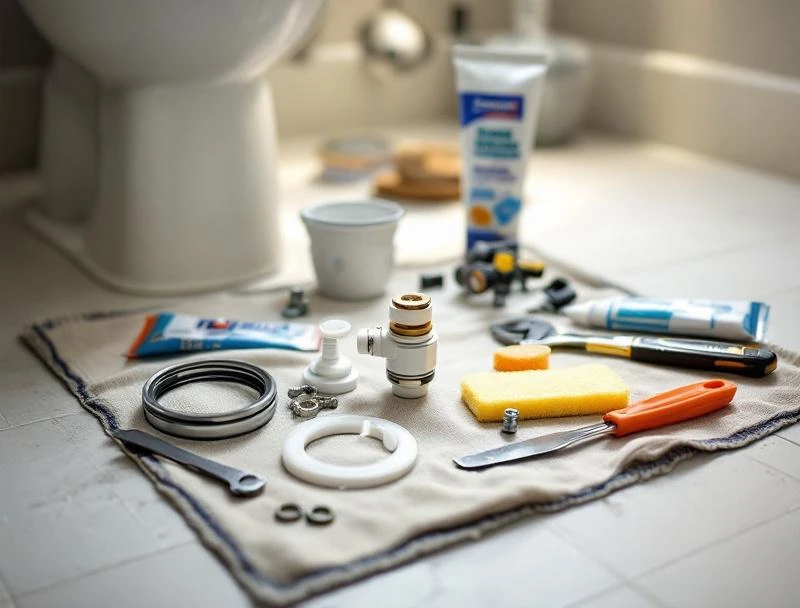
An overflowing toilet at midnight with water already on the bathroom floor doesn’t wait for morning, and an anytime plumber on rotating dispatch rolls a truck the same night with replacement parts on board. Truck stocks include Fluidmaster 400A fill valves, Korky 528 fills, universal flappers, wax rings (standard and extra-thick), closet T-bolts, and bathroom-grade silicone caulk for next-call readiness.
A cracked tank or bowl is irreparable. We cap the supply, drain the unit, and quote replacement scope on-site. A hairline crack that’s seeping is a tank that’s about to fail catastrophically — replacement is the only durable fix.
Stopping an Overflow Before It Reaches the Floor
The first move in any active overflow is to close the angle stop on the wall behind the toilet. Turn the small valve clockwise until it stops. Water flow into the tank halts. Then lift the flapper inside the tank with your hand or a small tool — water in the tank drains through the bowl and out the trap, lowering the bowl water level below the rim.
If the toilet auger doesn’t clear the blockage from the bowl trap, the issue lives further down the branch — see our emergency drain cleaning Cincinnati OH page for branch-line cabling and jetting work. Toilet bowl traps clear with a closet auger 90% of the time. Persistent backup after toilet auger work points to branch line obstruction.
Toilet augers (closet augers, drum-style, 6-foot minimum) are the right tool for bowl trap clogs. Snake-style household drain snakes are too small and risk scratching the bowl. Standard household plungers work on minor clogs but lack the force for solid obstructions.
Why a Toilet Won’t Flush — Common Causes
Most “won’t flush” calls trace to one of five causes: trip lever broken or disconnected from the chain, flapper chain stuck or wrong length, snapped or warped flush valve, fill valve not filling enough water for a proper flush, or angle stop accidentally closed. Visual inspection inside the tank identifies the cause in 30 seconds.
If every drain in the house gurgles when you flush, the issue isn’t the toilet — it’s the lateral, and our Cincinnati sewer backup page covers main-line cabling and camera inspection for those symptoms. The cross-link distinguishes toilet hardware (this scope) from main-line drainage failures (sewer scope).
Pressure-assist toilets (Sloan Flushmate inserts) have a sealed pressure tank inside the porcelain tank and require different troubleshooting than standard gravity-flush toilets. Service kits and pressure-assist diagnostic gear ride on the plumber's trucks for Flushmate-equipped Toto and American Standard models.
Tank Components and What Each One Does
The fill valve (ballcock) refills the tank after each flush. Modern fill valves use diaphragms or floats to shut off when the tank reaches set level. Continuous-running symptoms typically trace to the fill valve. The Fluidmaster 400A has been the de facto Cincinnati replacement standard for 40+ years; brand-specific Toto, Kohler, and American Standard valves are required when the original uses a proprietary mounting (common on post-2010 high-efficiency models).
The flush valve (flush tower) releases water from the tank into the bowl when triggered by the flush handle. The flapper rests on the flush valve seat and lifts to release water. A failing flapper produces ghost-flushing symptoms — the tank refills periodically as water leaks past the flapper into the bowl. Universal flappers fit most toilets; some specialty units (Toto Drake II, Kohler Cimarron) need brand-specific replacement.
Tank-to-bowl bolts and gasket sit between the tank and bowl on two-piece toilets. A failure produces water visible between the tank and bowl, dripping down the sides. Replacement requires removing the tank, replacing the gasket and bolt washers, and resetting the tank. The supply line and angle stop deliver water from the wall to the fill valve. Pre-1986 supply connections may have lead-bearing solder; current code requires lead-free replacement on any service.
Wax Ring, Flange, and Base Leak Diagnosis
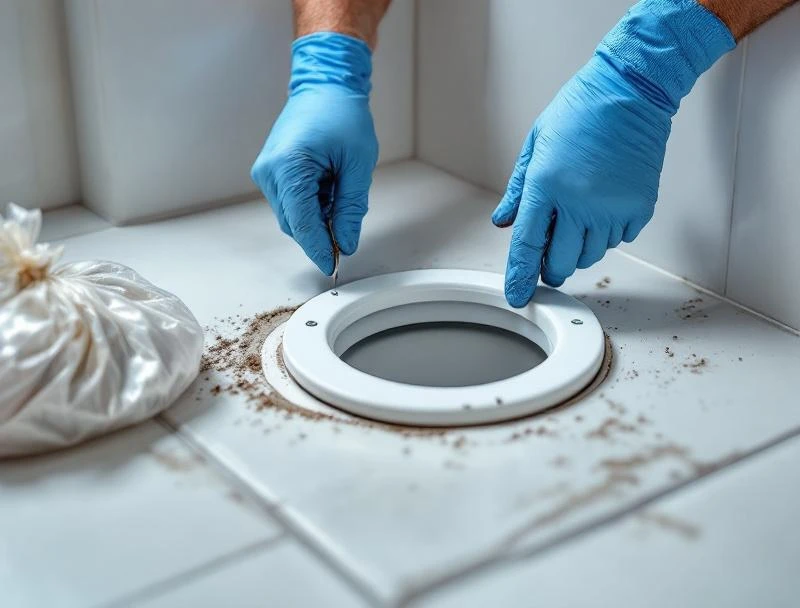
Water at the toilet base most often signals failed wax ring. The seal between the toilet base and the closet flange has compressed past spec, settled, or been broken by a rocking toilet. Replacement requires pulling the toilet, scraping old wax, inspecting the flange, setting a new wax ring (or Fluidmaster waxless seal), and resetting with new T-bolts.
When water appears at the toilet base but the wax ring tests sound, the source may be elsewhere entirely, and our techs use acoustic and thermal equipment to find hidden leaks in the subfloor or wall instead of swapping another wax ring. Misdiagnosis happens — bathroom moisture from a hidden supply leak two walls over can look identical to a base seal failure.
Cast iron closet flanges in pre-1960 Cincinnati homes corrode through at the bolt slots first. A “rocking toilet” in an older home is most often a failed cast iron flange rather than a wax ring issue. Replacement (cast iron to PVC) runs $450–$850 depending on access. The Ohio Plumbing Code requires the closet flange to sit on top of the finished floor; Cincinnati homes that have had tile or LVP added without flange height adjustment frequently need flange extender rings during a toilet pull.
Pricing for Toilet Service in Hamilton County
Diagnostic: $85–$150. Toilet auger work: $150–$300. Fill valve replacement: $150–$275. Flapper replacement: $125–$200. Flush valve replacement: $200–$350. Tank-to-bowl gasket: $200–$350. Wax ring pull-and-reset: $250–$450. Closet flange repair: $300–$550. Closet flange replacement: $450–$850. New toilet install (provided unit): $250–$450. New toilet supplied and installed (1.28 GPF standard): $450–$800. Premium toilet (Toto Drake II, Kohler Cimarron) supplied and installed: $700–$1,200. Pressure-assist install (Flushmate): $800–$1,400.
Cincinnati Department of Buildings does not require a permit for like-for-like toilet replacement. Permits apply to flange replacement, new bathroom rough-in, and any change to the lateral connection.
Repair vs Replacement on Older Cincinnati Toilets
Pre-1992 toilets at 3.5–5 GPF flush volume waste roughly 4,000+ gallons annually per toilet versus 1.28 GPF replacements. Replacement payback runs 2–4 years on Cincinnati water rates. Beyond water savings, modern toilets flush more reliably with less clogging and less hardware maintenance. Toilets with cracked tanks or bowls, repeat hardware failures within 18 months, or rocking caused by flange damage typically warrant replacement rather than continued repair.
Toto and Kohler high-efficiency toilets with proprietary fill valves often outlast generic Fluidmaster replacements by 5+ years because the engineered valve matches the tank geometry better than a universal aftermarket. Pressure-assist Flushmate units provide stronger flush at 1.28 GPF but require periodic cartridge maintenance and have a higher service cost when issues arise.
Code Requirements for Toilet Installation in Ohio
Ohio Plumbing Code section 425 covers water closets. OPC 425.1 sets the 1.28 GPF maximum. OPC 405.5 requires caulking at the floor on the front and sides while leaving the rear open for leak detection — this lets a future failing wax ring become visible rather than soaking the subfloor invisibly. OPC 405.4.3 requires the closet flange to sit on top of the finished floor.
Pre-1986 Cincinnati toilet supply connections may contain lead-bearing solder; current code (Reduction of Lead in Drinking Water Act 2014, Ohio-adopted) requires lead-free replacement on any service work. Pre-1995 toilets without thermal expansion accommodations may have triggered T&P drips on connected water heaters; expansion tank install on the heater addresses the underlying pressure issue.
OCILB master plumber credential is required for permits on flange replacement and new bathroom rough-in. License verification at license.ohio.gov shows status, expiration, and any disciplinary history. The licence number appears on every invoice the plumber issues.
Need a Cincinnati Plumber Now?
Licensed · Bonded · Available 24/7
See Our Emergency Toilet Repair Cincinnati OH Work in Cincinnati
Network Service Guarantees
- Written estimate before work begins
- All parts and labour warranted
- Licensed Ohio plumbers — verify at license.ohio.gov
- Same-day emergency service available 24/7
Pricing in Hamilton County
| Service | Cincinnati Range | Time Required |
|---|---|---|
| Service call / diagnostic | $85–$150 | 30 min |
| Toilet auger work (clog clearing) | $150–$300 | 30–60 min |
| Fill valve replacement | $150–$275 | 30–60 min |
| Flapper replacement | $125–$200 | 20–30 min |
| Flush valve replacement | $200–$350 | 1–2 hours |
| Tank-to-bowl gasket replacement | $200–$350 | 1 hour |
| Wax ring replacement (pull and reset) | $250–$450 | 1–2 hours |
| Closet flange repair | $300–$550 | 1–2 hours |
| Closet flange replacement (cast iron to PVC) | $450–$850 | 2–3 hours |
| New toilet install (provided unit) | $250–$450 | 1–2 hours |
| New toilet supplied + installed (1.28 GPF) | $450–$800 | 1–2 hours |
| Premium toilet supplied + installed (Toto, Kohler) | $700–$1,200 | 1–2 hours |
| Pressure-assist toilet install (Flushmate) | $800–$1,400 | 2–3 hours |
← Scroll to see more →
DIY vs Licensed Plumber
| Aspect | DIY Attempt | Licensed Plumber |
|---|---|---|
| Code compliance | Often fails inspection | Built to Ohio code |
| Permit | Not pulled | Cincinnati permit + inspection |
| Pressure test | Skipped | 100 PSI / 15 min per OPC 312 |
| Insurance | May void coverage | Licensed work covered |
| Warranty | No warranty | Parts and labour warranted |
| Recurrence rate | High (no diagnosis) | Low (root cause addressed) |
← Scroll to see more →
Get a Written Estimate Before Work Begins
Licensed Ohio plumbers — verify at license.ohio.gov
Without Professional Service
- Water damage continues spreading
- Larger repair bill comes later
- No permits pulled (insurance issues)
- Unlicensed work fails inspection
With a Licensed Network Plumber
- Fast emergency response time
- Proper repair to Ohio code
- Permits pulled when required
- Work guaranteed and warranted
Cincinnati-Specific Considerations
Cincinnati's housing stock is mixed — pre-1940 ~30%, 1940–1970 ~25%, post-1970 the balance. Each era has characteristic plumbing materials and failure modes. Pre-1940 homes in Northside, Price Hill, Walnut Hills, and Norwood frequently have galvanized supply and cast iron drain still in active service. Mid-century stock has Type M copper hitting end of life now. Suburban slab-on-grade in West Chester, Mason, Liberty Township concentrates slab-leak risk on copper-rebar contact points.
Greater Cincinnati Water Works delivers water at 120–150 mg/L hardness with chloramine disinfection (since 2015). The combination accelerates anode rod consumption, shortens Type M copper service life, and produces characteristic mineral buildup in drain lines. Cincinnati's 30 average freeze days per year drive winter freeze and burst events clustered between January and February. Polar vortex stretches push freeze risk into normally safe interior wall locations.
Cincinnati water and infrastructure
Ohio Licensing and Code Compliance
Every plumbing contractor in Ohio holds an OCILB master plumber licence (or works under one). The Ohio Construction Industry Licensing Board maintains a public lookup at license.ohio.gov — search by contractor name or licence number to verify status, expiration, and any disciplinary history. Cincinnati Department of Buildings handles permits inside city limits; Hamilton County Building Department covers unincorporated areas and townships.
The Ohio Plumbing Code (Ohio Administrative Code 4101:3) is the adopted IPC with Ohio amendments. Pressure test requirements, expansion tank mandates on closed systems with PRV or check valve, lead-free solder on all repair joints, and proper venting on every fixture all apply to emergency repair work the same as scheduled work. The Ohio Plumbing Code allows up to 72 hours to file emergency-work permits with Cincinnati Department of Buildings, giving overnight crews legal cover for after-the-fact filing.
License verification
Frequently Asked Questions
Related Services
Emergency Drain Cleaning Cincinnati OH
Need emergency drain cleaning in Cincinnati OH? Licensed plumbers in our network clear kitchen, bath, and shower clogs fast with proper equipment. Call now.
Learn More →Water Leak Detection Cincinnati OH
Need water leak detection in Cincinnati OH? Licensed plumbers in our network locate hidden, slab, and slow leaks with acoustic and thermal tools. Call now.
Learn More →Sewer Line Backup Cincinnati OH
Sewer line backup in Cincinnati OH? We camera, jet, and clear main lines fast. Network plumbers handle MSD-side coordination too. Call now.
Learn More →